

Nobody buys an espresso machine because they're excited to clean it. But here's the reality: your super automatic handles coffee oils, milk proteins, and mineral-laden water every single day. Left alone, those things don't just sit there quietly waiting for you to get around to them, they degrade your coffee flavor, shorten the machine's working life, and in the case of milk residue, create a sanitation problem that's genuinely unpleasant to deal with once it's developed.
The good news is that cleaning a super automatic isn't actually that hard. The machines are designed to make it manageable. The only real requirement is consistency. Here's the full breakdown of what needs doing and when.
Why This Matters More Than Most People Realize
Coffee contains oils. When those oils run through the brew group, the internal pipes, and the portafilter day after day, they oxidize and eventually go rancid. Old coffee oil makes fresh coffee taste bitter and stale in ways that no amount of bean quality can overcome. That persistent bitter aftertaste people often attribute to the machine or their beans is frequently just oil buildup that's been there for weeks.
Milk is more urgent. Milk proteins and fats deposit on every surface they contact and spoil faster than coffee does. A milk system that hasn't been cleaned in a week develops residue that tastes genuinely bad, and in a machine that's running warm most of the day, bacteria can establish themselves faster than you'd prefer to think about. The milk system is the most time-sensitive cleaning task by a significant margin.
Scale is slower but ultimately expensive. Calcium and magnesium from your tap water build up inside the boiler and pipes over time. Scale doesn't dramatically affect taste right away, but it insulates the heating element and forces it to work harder to reach temperature, degrading performance incrementally and eventually damaging the boiler if it's never addressed. Regular descaling is basically insurance against a repair bill.
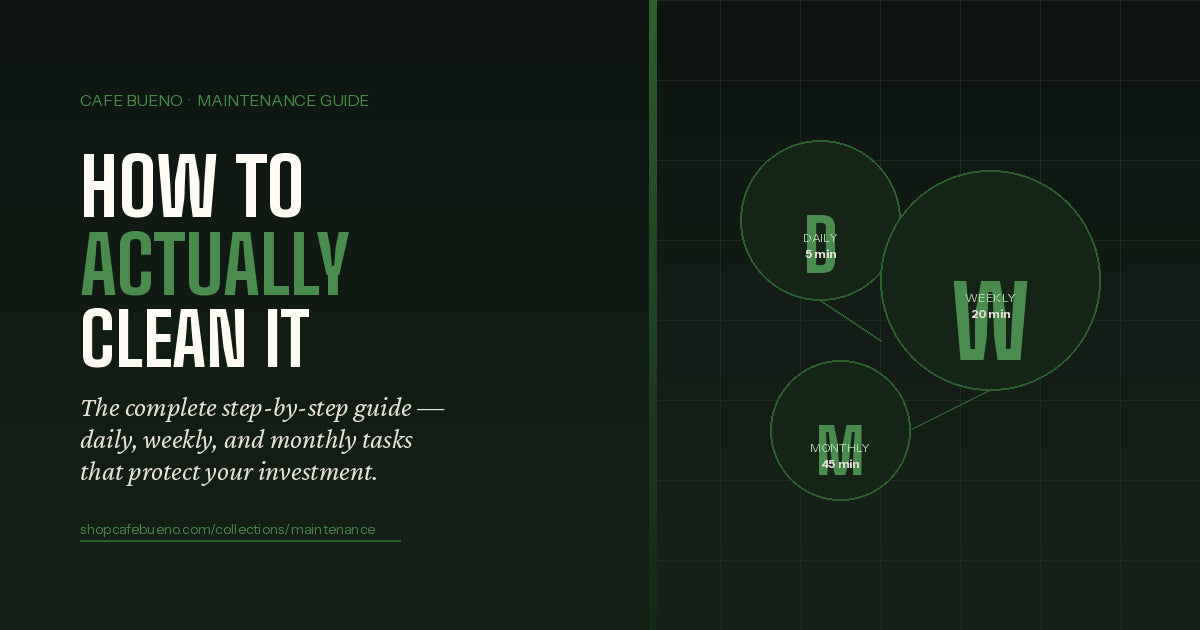
Daily Maintenance: About 5 Minutes
This depends on the model of your machine, but generally guidelines are to run the automatic rinse cycle every day. Your machine will typically prompt you to do this on startup or shutdown, follow the prompt instead of dismissing it. This flushes residual coffee from the brew group and internal pipes, which is where rancid oil buildup starts.
Wipe down the milk frother and any external milk components after every single use (if you are using one of our semi-automatic machines. Don't let milk residue sit until tomorrow. This is the single most impactful daily habit you can establish, and it takes about 30 seconds.
Empty the drip tray when the indicator tells you. This takes less than a minute and prevents overflow that becomes a mess and a cleaning problem of its own.
When refilling the water tank, rinse it briefly rather than just topping off old water with fresh. Water that's been sitting in a reservoir for a day or two isn't doing your machine any favors.

Weekly Cleaning: 5 Minutes
Brew group
On machines with a removable brew group, which includes the CB-2000, CB-3000, CB-3500, and CB-4000 (as of 6/27/26), remove it once a week and rinse it under warm running water. No soap needed. Let it air dry or dry it with a cloth before reinstalling. This removes coffee oil and grounds that accumulate in ways the daily rinse cycle doesn't reach.
Bean hopper
Empty the remaining beans, wipe down the interior of the hopper with a dry cloth, and reload. Ground coffee particles and oils collect in the hopper walls and can eventually affect grind consistency and flavor over time.
Milk system
If your machine has an automatic milk system, the CB-3000, CB-3500, and CB-4000, run it monthly at a minimum, but weekly is better if you're making milk drinks daily. Be sure to use our milk system cleaner. For machines with removable milk components, soak them for 10 to 15 minutes in warm water with our dedicated milk cleaner. This dissolves protein deposits that a simple rinse misses entirely.
Monthly Descaling: 10 to 15 Minutes
Use a dedicated descaling solution rather than vinegar. Vinegar can leave residue and damage rubber seals inside the machine over time, a small thing that adds up. Cafe Bueno's descaling solution is formulated specifically for their machines, which matters more than it might sound because the concentration and pH are matched to the materials the water circuit is made from.
Here's the process step by step (for the CB-4000 machine):
1. Mix the descaling solution with water according to the proportions in your machine's manual. The ratio matters, follow it rather than estimating.
2. Pour the solution into the water tank and start the descaling cycle from the machine menu.
3. The machine will push the solution through the entire water circuit in stages — this usually takes 20 to 30 minutes with pauses built in.
4. Once the cycle completes, the machine will move on to the rinsing cycle. Don't skip this, descaling solution is not something you want residual traces of in your coffee.
You'll know you've waited too long between descaling cycles when your machine starts taking noticeably longer to heat up, or when you detect a faint mineral flavor in your coffee that wasn't there before. At that point, do it immediately and set a monthly reminder so it doesn't creep up on you again.

The Cleaning Products That Actually Matter
You don't need 12 different products and a dedicated cabinet. You need three things, and that's genuinely it.
Our espresso machine cleaning tablets for the brew group. This is different from a descaler, it's formulated to break down coffee oils specifically. Cafe Bueno sells these, and using the formulation matched to your machine's materials is worth it over generic alternatives.
A descaling solution for the boiler circuit. As covered above, use the right product, follow the ratios, run a rinse cycle after.
A milk system cleaner. Either tablets that dissolve in warm water or a dedicated liquid cleaner. Use weekly if milk drinks are a daily habit in your household.
That's the entire product list. The people who end up with broken or underperforming machines are almost never the ones who used the wrong cleaning product — they're the ones who simply didn't clean at all, or who cleaned erratically for six months and then stopped.
What Happens If You Skip Cleaning
Skipping cleaning doesn't ruin a machine overnight. It happens gradually, which is exactly why people let it happen — they don't notice the slow decline until something actually breaks.
The sequence usually goes like this: coffee starts tasting slightly more bitter and flat than it used to. You adjust bean strength settings trying to compensate. The milk texture gets slightly off. You assume it's just a bad bag of beans. Then one morning the brew group seizes, or the milk system clogs completely, or the machine starts flashing an error that requires professional service to clear.
A $9 bottle of descaling solution used monthly is a considerably more appealing proposition than a $300+ repair bill or replacing the machine entirely because maintenance was skipped long enough that the damage is permanent. The cleaning routine exists because the machine is doing real work every day. Treat it accordingly and it'll keep making excellent coffee for years longer than a neglected machine would.
Share:
The Best Coffee Beans for Your Super Automatic Espresso Machine
What Is a Bean-to-Cup Espresso Machine? A Real Beginner's Guide